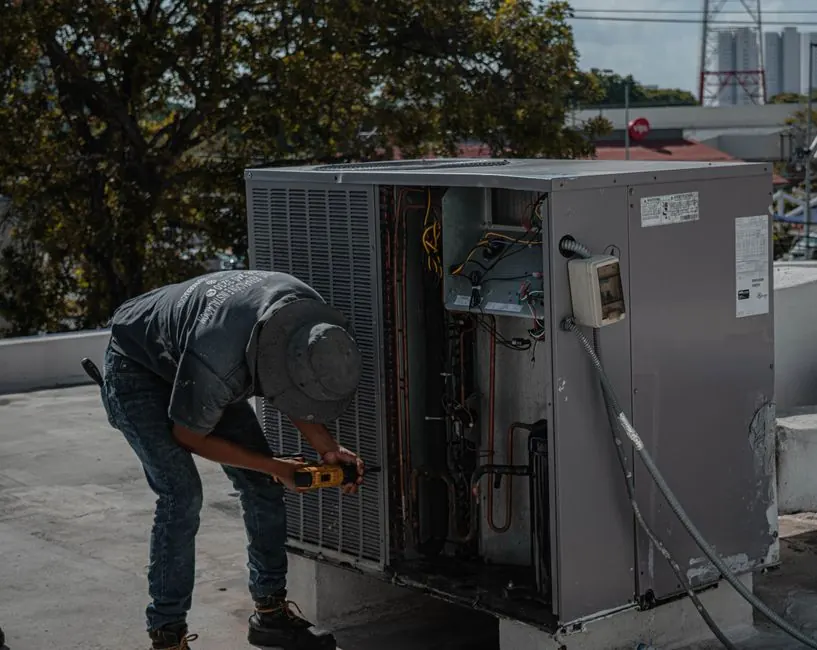
Your furnace shuts off before reaching the thermostat setting because something is interrupting the call for heat - most often a safety limit switch, a dirty flame sensor, or a thermostat losing its signal. The furnace is not failing randomly; it is doing exactly what it was built to do when a sensor reads a condition it does not like.
Furnace short cycling is the term for that pattern: the burner fires, runs for a few minutes, cuts out, and repeats without ever satisfying the thermostat. In Flagstaff, where overnight lows hit the teens and single digits from November through March, that pattern costs you comfort and money at the same time. Below, we walk through the seven causes we see most, what repairs cost in 2026, and the mistakes that turn a $180 fix into a $1,400 blower motor replacement.
The short answer: your furnace is protecting itself
A furnace short cycling is a protective shutdown, not a random failure. Modern gas furnaces monitor flame presence, air temperature inside the heat exchanger, airflow across the blower, and exhaust draft. When any of those readings fall outside the safe window, the control board cuts the gas valve and waits for a reset.
The result is a furnace that runs for 90 seconds to 5 minutes, shuts down, waits 30 to 90 seconds, and tries again. It never reaches the 68°F or 70°F you set. On a 15°F night in Flagstaff, that cycle can repeat 40 to 60 times before morning.
Two things matter here. First, the shutdown is usually a symptom, not the disease - the real problem is whatever the sensor is reacting to. Second, every short cycle puts wear on the igniter, inducer motor, and blower. A furnace rated for 20,000 cycles a year can burn through 60,000 when it short cycles, which is why ignoring it shortens equipment life by years.
Why does my furnace keep shutting off before reaching thermostat setting in Flagstaff AZ?
Flagstaff's climate and housing stock create a specific set of short-cycling triggers you will not see in Phoenix or Tucson. At 7,000 feet, the air is thinner, which changes combustion and airflow characteristics. Winter design temperatures sit near 5°F, so furnaces run long, hard cycles instead of the short bursts common in warmer markets.
Add in the age of the housing stock - much of Downtown Flagstaff and the neighborhoods near Northern Arizona University were built between the 1920s and the 1970s - and you get undersized return ducts, uninsulated crawlspaces, and furnaces that were sized for a different era of insulation. A furnace that is oversized for the actual heat load will satisfy a thermostat in 4 minutes, then sit off for 20, then repeat. That is short cycling by design, not by fault.
We also see altitude-related derating issues. A gas furnace installed at sea level and moved to 7,000 feet without a manifold pressure adjustment will run rich, overheat the heat exchanger, and trip the high-limit switch on every cycle. If your furnace was installed by a crew from the Valley, that is the first thing we check.
The seven causes we find most often in Flagstaff homes
Across thousands of service calls in Flagstaff, these seven causes account for the vast majority of furnaces that turn off early. We list them roughly in order of how often we find them, not how serious they are.
1. A clogged or dirty air filter
This is the single most common cause we find, and the cheapest to fix. A filter loaded with Flagstaff's spring pollen and winter dust restricts airflow, the heat exchanger overheats, and the high-limit switch trips. If your filter is more than 60 days old, replace it before you call anyone.
2. A failing high-limit switch
The high-limit switch is a safety device that opens when the heat exchanger exceeds roughly 160°F to 180°F. When it fails, it opens early - sometimes at 120°F - and your furnace shuts down long before the house warms up. A replacement limit switch runs $45 to $120 in parts, plus labor. This is a Furnace Limit Switch Repair Flagstaff AZ call we handle several times a week in winter.
3. A dirty flame sensor
The flame sensor is a small metal rod that proves the burner lit. When it gets coated with carbon or silica, it stops sensing flame within 3 to 7 seconds of ignition and the board shuts the gas valve. Cleaning takes 15 minutes; replacement is $30 to $80 in parts. Left alone, it will eventually leave you with a Furnace Not Turning On Flagstaff AZ situation on the coldest night of the year.
4. A thermostat that is losing its signal
Thermostats fail in two ways that cause short cycling: a bad anticipator setting (on older mechanical models) or a failing internal relay (on digital models). If your thermostat is more than 12 years old, or if you have to tap it to get the furnace to start, that is your culprit. We test thermostat signal at the control board before recommending replacement.
5. An oversized furnace
A furnace that produces 100,000 BTU for a house that needs 60,000 BTU will heat the space in 5 minutes and shut off. It will do that 10 to 12 times an hour. The fix is not a repair - it is a proper Manual J load calculation and a correctly sized replacement. We see this most in Doney Park and Timberline, where additions and window upgrades have changed the heat load since the original furnace was installed.
6. A failing control board
The control board coordinates ignition, blower timing, and safety lockouts. When the board's relays degrade, it can drop the call for heat mid-cycle. Diagnosis requires a multimeter and the manufacturer's fault codes. A Furnace Control Board Repair Flagstaff AZ typically runs $350 to $700 installed, depending on the board.
7. A blocked or failing inducer motor
The inducer motor pulls exhaust gases out of the heat exchanger and proves draft before ignition. A weak inducer trips the pressure switch and shuts the furnace down within seconds of firing. If you hear a high-pitched whine before shutdown, the inducer is the likely cause. Replacement runs $400 to $800 installed.
What furnace short cycling costs to fix in 2026
Typical 2026 pricing in Flagstaff for short-cycling repairs breaks down like this:
- Diagnostic visit: $89 to $149, often waived if you approve the repair.
- Filter replacement: $15 to $45 for the part, no labor if done during a tune-up.
- Flame sensor clean or replace: $95 to $180.
- Limit switch replacement: $150 to $280.
- Thermostat replacement: $180 to $450 installed, depending on model.
- Control board replacement: $350 to $700.
- Inducer motor replacement: $400 to $800.
- Blower motor replacement: $600 to $1,400.
If the diagnosis comes back as an oversized furnace, a correctly sized replacement runs $4,200 to $7,800 installed in Flagstaff, including the load calculation, permit, and haul-away. That is not the answer most homeowners want, but it is cheaper than paying for a blower motor every three years on a furnace that was never right for the house.
One note on emergency pricing: after-hours calls in Flagstaff carry a $150 to $300 premium between November and March. If your furnace is short cycling on a Tuesday afternoon, you will pay less than if you call at 11 p.m. on a Saturday. If you need us after hours, our Emergency Furnace Repair Flagstaff AZ team is on call through the winter.
Common mistakes homeowners make with a furnace that turns off early
The mistakes below are the ones that turn a small repair into a large one. We see all of them every winter.
- Replacing the thermostat first. A new thermostat does not fix a dirty flame sensor. Diagnose the furnace before you spend $250 on a smart thermostat.
- Jumping the limit switch. Bypassing a safety switch to keep the furnace running is how people end up with a cracked heat exchanger and a carbon monoxide problem. Never do this.
- Running a filter that is too restrictive. High-MERV filters (MERV 13 and up) choke airflow in older Flagstaff duct systems. Use MERV 8 to MERV 11 unless your contractor specifically sized the system for higher.
- Ignoring the fault code. Every modern furnace flashes a code on the control board LED. Counting the flashes before you call saves the technician 20 minutes and saves you money.
- Assuming it is the igniter. A furnace that lights and then shuts off is not an igniter problem. An igniter problem is a furnace that never lights at all.
If you are not sure which of these applies, do not guess. A $99 diagnostic is cheaper than a $700 control board you did not need.
When to call a professional
Call a professional the moment you smell gas, see soot around the burner compartment, or hear the furnace rattle before shutdown. Those three signs point to combustion or heat exchanger problems that are not DIY territory.
For less urgent symptoms - short cycling without a gas smell, a furnace that runs but never satisfies the thermostat, or a fault code you cannot clear - a diagnostic visit is still the right move if the problem has persisted more than two days. Short cycling wears out the igniter, inducer, and blower, and those parts cost more than the diagnosis.
Our team handles Residential Furnace Repair Flagstaff AZ across every neighborhood in town, from Downtown Flagstaff to Doney Park to Kachina Village. We carry common limit switches, flame sensors, and control boards on the truck, which means most short-cycling repairs are finished in a single visit.
Frequently Asked Questions
Why does my furnace keep shutting off before reaching thermostat setting in Flagstaff?
The most common cause is a safety limit switch tripping because of restricted airflow - usually a dirty filter or an undersized return duct. At Flagstaff's 7,000-foot elevation, altitude-related combustion issues and oversized furnaces also cause early shutdowns. A diagnostic visit identifies which one you have in under an hour.
What causes furnace short cycling in Flagstaff AZ?
Short cycling in Flagstaff is caused by clogged filters, dirty flame sensors, failing limit switches, thermostat signal loss, oversized equipment, control board faults, or weak inducer motors. The pattern - run 2 to 5 minutes, off 1 to 2 minutes, repeat - is the same regardless of cause. Diagnosis is the only way to know which part is at fault.
How do I stop my furnace from shutting off early in Flagstaff?
Start with the filter: replace it if it is more than 60 days old. Check the thermostat batteries and confirm the setpoint is at least 3°F above room temperature. If the furnace still shuts off early, note the fault code on the control board and call a technician. Do not bypass any safety switch.
Should I call a pro for furnace short cycling in Flagstaff AZ?
Yes, if the problem persists more than 48 hours or repeats more than 6 times an hour. Short cycling accelerates wear on the igniter, inducer, and blower, and those repairs run $95 to $1,400. A $99 to $149 diagnostic is almost always cheaper than waiting for a part to fail completely.
Is furnace short cycling dangerous in Flagstaff?
Short cycling itself is not immediately dangerous, but the conditions that cause it can be. A tripped limit switch often means the heat exchanger is overheating, and repeated overheating can crack it, allowing carbon monoxide into your home. If you smell gas or see soot, shut the furnace off and call immediately.
Get help with Furnace Repair in Flagstaff
If your furnace keeps turning off before the house warms up, we can diagnose it today and tell you exactly what it will cost before we start. Our technicians work on every major brand and carry the parts that cause most short-cycling calls.
Call Flagstaff Furnace Repair Pros at (928) 270-0357 to schedule a diagnostic. We serve all of Flagstaff, including Downtown, Doney Park, Timberline, and Kachina Village.